
Poland or Germany – Comparing the Cost of Living. Where Is It Really More Profitable to Live and Work?
July 17, 2026
Organizer
Organized through: WorkRadar.EU
Article
Higher salaries in Germany have attracted Polish workers for many years. However, many people wonder whether earning more actually means saving more. The answer is not straightforward, as everyday expenses such as rent, groceries, transport, and utility bills play a crucial role.
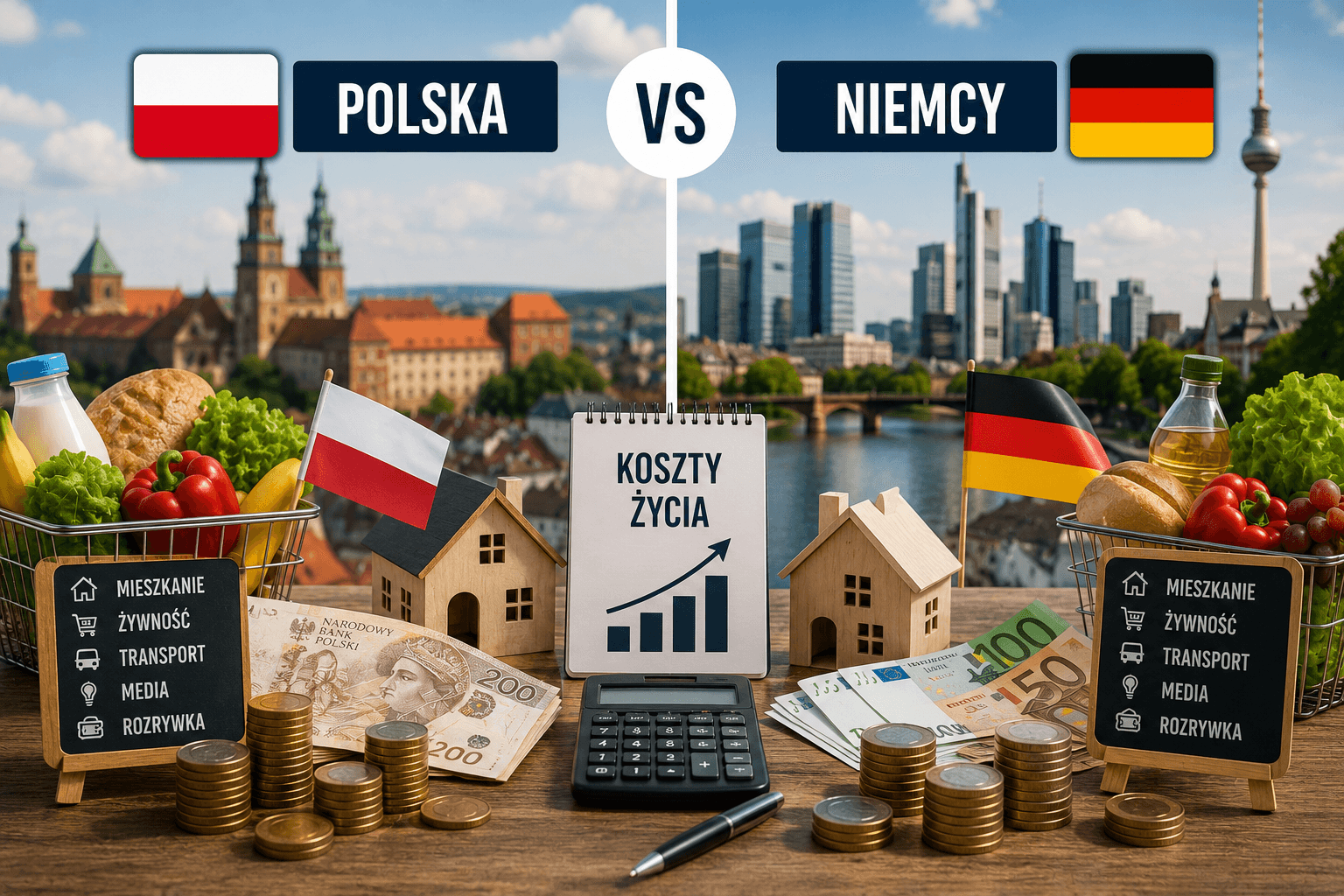
Although living in Germany is noticeably more expensive than in Poland, the gap in living costs is smaller than the difference in wages. This is one of the main reasons why working in Germany continues to be financially attractive for many people. Overall, the cost of living in Poland is estimated to be around 25–30% lower than in Germany, while average net salaries in Germany are nearly twice as high.
Housing Costs
Accommodation is usually the largest monthly expense.
In Poland, renting a studio or a small apartment outside the city center typically costs between PLN 2,000 and PLN 3,000 per month, although prices are considerably higher in the largest cities.
In Germany, a comparable apartment usually costs between €900 and €1,200 per month, while cities such as Munich, Frankfurt, and Hamburg are significantly more expensive. However, many employees recruited through staffing agencies receive employer-provided or subsidized accommodation, which can substantially reduce monthly living expenses.
Grocery Prices
Food prices in Germany are no longer dramatically higher than in Poland.
Many everyday products, including dairy, bread, and household essentials, are available at similar prices. The biggest differences are usually found in restaurant meals and some fresh produce.
For people who plan their shopping carefully, monthly grocery expenses in Germany are higher, but generally not in proportion to the increase in earnings.
Transportation
Public transport is more expensive in Germany, but residents benefit from an extensive and reliable transportation network.
Those commuting by car should expect higher fuel, insurance, and maintenance costs. On the other hand, many employers offer travel allowances or reimburse part of commuting expenses.
Utilities and Everyday Expenses
Electricity, heating, internet, and other household bills are generally more expensive in Germany than in Poland.
Services such as hairdressers, home repairs, and cleaning are also more costly. However, prices for clothing, electronics, and products sold by international retail chains are often very similar, and during seasonal sales they can even be lower than in Poland.
What About Salaries?
This is where the biggest differences become apparent.
In Poland, warehouse workers, production employees, and forklift operators typically earn between PLN 5,500 and PLN 8,500 gross per month, depending on experience and location.
In Germany, employees in similar positions can often expect €2,500–3,500 net per month. Skilled professionals such as CNC operators, electricians, and welders frequently earn even more.
As a result, despite higher living expenses, many workers are still able to save significantly more money in Germany than they could while working in Poland.
Where Is It Easier to Save Money?
The answer largely depends on your lifestyle.
If you rent a private apartment in one of Germany's major cities, housing costs will consume a significant portion of your income.
However, if your employer provides accommodation or covers part of the rent, your savings potential increases considerably. This is why many Polish workers employed in logistics, manufacturing, and construction choose to work in Germany while maintaining their families or property in Poland.
Is Moving to Germany Still Worth It?
For many people, the answer is yes.
Germany continues to offer:
- higher salaries,
- a stable job market,
- a large number of employment opportunities,
- a well-developed social security system,
- strong career development prospects.
Before accepting a job offer, however, it is essential to compare not only the hourly wage but also accommodation costs, employee benefits, guaranteed working hours, and the type of employment contract. These factors ultimately determine how much money you will actually have left at the end of each month.
Conclusion
Poland remains a country with a lower cost of living, but also considerably lower wages. Germany is more expensive when it comes to housing, services, and many everyday expenses, yet significantly higher salaries often allow workers to build greater savings despite these higher costs.
If you are considering working abroad, look beyond the advertised hourly rate. Accommodation, additional benefits, guaranteed working hours, and employment conditions have a much greater impact on your financial situation than salary alone. You can also find current job opportunities in both Poland and Germany on WorkRadar.eu.